Thai Poosam
-
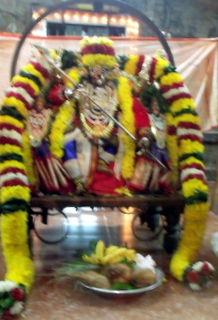
 The Thai Poosam festival which falls in the month of Thai (Jan-Feb) during the constellation of Poosam is generally dedicated to God Muruga or Subramanya. However, in Tiruvannamalai, the Thai Poosam and Maasi Magam festivals are connected with the erstwhile king Vallala Maharaja who after being childless received the great blessing (as a fruit of his devotion), of Shiva Himself coming down and becoming his son. Thai Poosam is the date of the death announcement of the king Vallala III who reigned in Tiruvannamalai during the 14th century, the last emperor of the Hoysala dynasty of Karnataka.
In the big temple, the festival begins with a grand abhishekam to Lord Palani Andavar
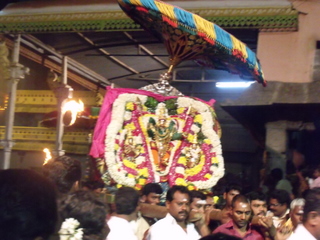
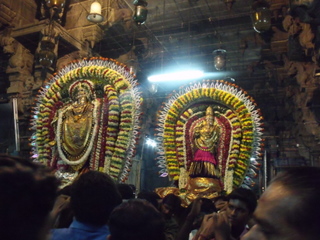
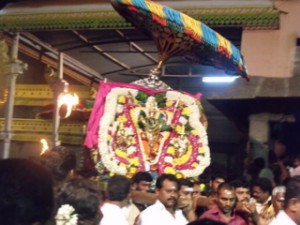 (another name for Muruga) in his shrine in the 4th courtyard and also in the Kambattu Ilayanar shrine in the 5th courtyard. This happens early in the morning. After this, Lord Shiva in the form of Chandrasekara and his consort Goddess Ambal along with the Astra deva or Trident deity come out in procession. After rounding the 4 streets bordering the temple, the procession of gods winds its way to the Isanya Tirtham which is situated in the crematorium at the North-Eastern corner of the town. There the Trident, weapon of Shiva, is bathed and then placed beside the deities of Shiva and Ambal who have meanwhile been installed in the Mourning Pavilion of the grounds.
On the return journey to the Temple, near the statue of Harischandra, (a legendary king
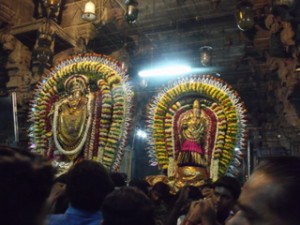 who was tested by Shiva and reduced to serving as crematorium worker) which is often placed at the entrances of crematoriums in Tamil Nadu, a character dressed completely in black robes, the Otran, spy or secret messenger, boldly halts the procession of the gods and hands over a message to the Oduvar or temple singer. The musicians accompanying the procession stop playing their music and in the silence that ensues, the Oduvar reads out loudly the announcement of the death of the king Vallala, murdered by treachery, while in combat with the king of Ottiyam land (Orissa). After hearing this the procession goes back accompanied by the chantings of the Oduvar and the din of the cymbals played by the temple drummers who now play a funeral march.
On the same day as the death announcement of the king, a man from the Vallalar community, Pachai Appa Goundar receives a letter by post, informing him of the death of the king. It says “Pachai Appa Goundar, Alas! you have to weep for your honoured father, the great Vallala Maharaja is no more ! In the house of Pachai Appa goundar from now onwards the members go into mourning and they start to eat talial a meal prepared from curd rice and bananas, only eaten during mourning times.
 When the gods arrive back to the Temple in procession, they stop at the statue of the king Vallala (which is in a niche on the passage bordering the entrance gopuram of the 4th courtyard) and here the king’s statue is bathed, anointed and decorated by a representative from the Vallala community. As the gods approach the entrance pavilion, an Aarathi (waving of lamps and camphor flame) is offered to the gods as well as to the king Vallala’s statue.
We will see the culmination of this historic event at the festival of Maasi Magam later this month during which the last rites for the departed soul of the king are performed by Lord Shiva himself (since it is tradition in India for the son to perform the last rites of his father).