 In Sanskrit, the term Dakshinayanam literally means southern
  journey. In this case, it refers to the Indian Summer solistice, for in hindu puranic yore the Sun is believed to move towards the South at this time. It seems to accentuate the idea that we are entering the darker part of the year – less sun, more rain, longer nights… As Arunachala is also revered as the Sun mountain, events involving the Sun are celebrated here as a festival.
 The Dakshinayanam festival begins in the big temple of Arunachaleswara exactly 10 days before the summer solistice
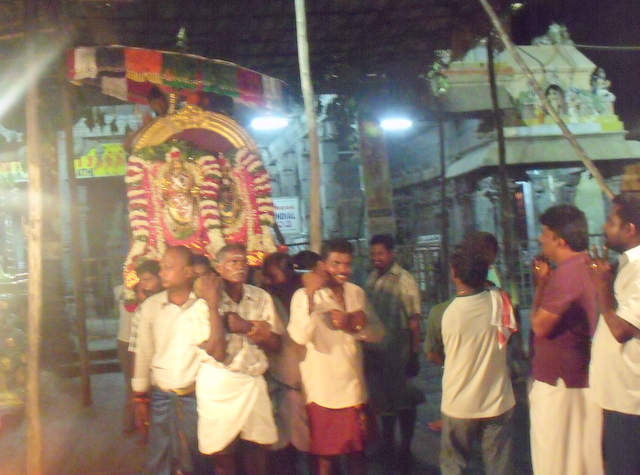
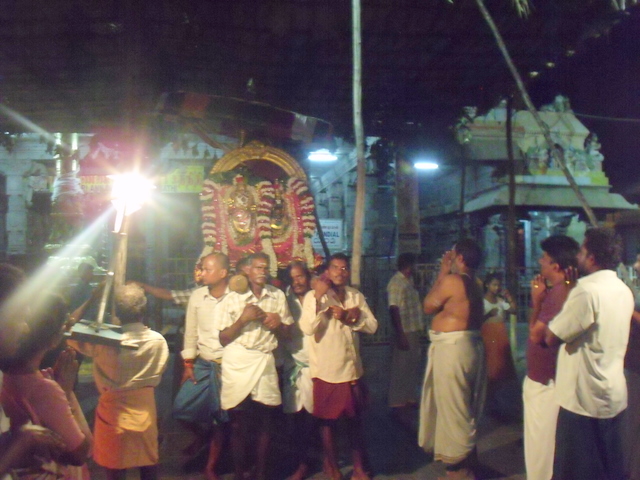
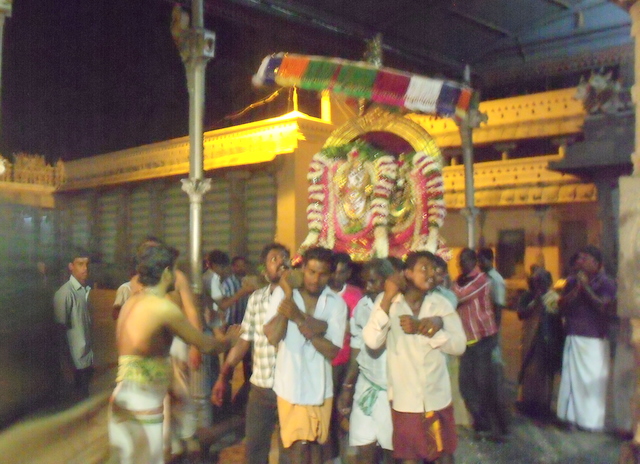
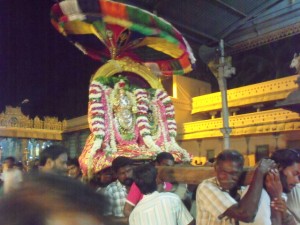
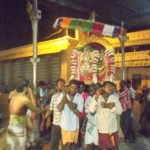
  which, in India, falls on the 17th of July. It follows the traditional course of an Utsavam (temple festival). Each day in the morning at sunrise and in the evening at sunset, the different gods of the hindu pantheon are taken out on procession. The yagasala is opened since the
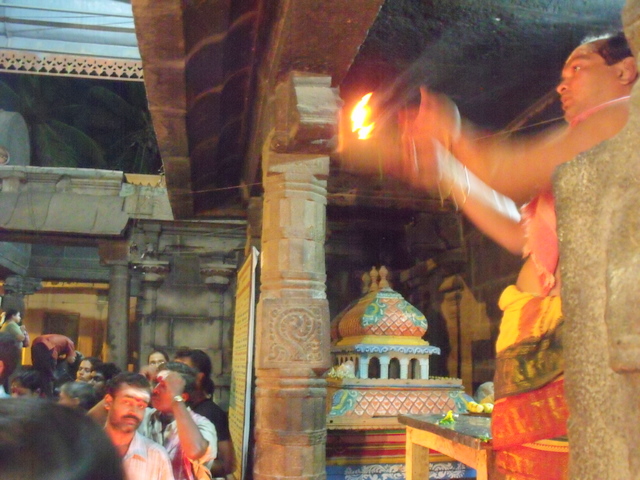
 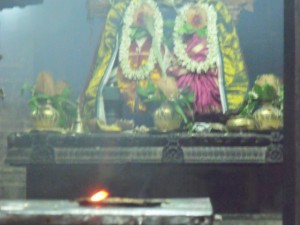 first day and two kalasams representing the Sun (Surya) and his wife, Chaya (the Shadow) are venerated according to vedic rituals during the first nine days. On the tenth day, at the culmination of the festival, the kalasams are brought outside on procession with the gods and taken inside the main shrine. The waters from the kalasams are then utilised to perform a grand abhishekam for the principal deities, Lord Arunachaleswara and His consort, Goddess Apeethakuchambal.
 Even though the meaning of the festival is not very explicit, one can eventually glean
  the cosmic dimension it represents, for at this time of year this festival apparently tries to define the auspicious period around which the idea of death leading to ascension is highlighted in a most subtle way.
Share