Aani Thirumanjanam
-
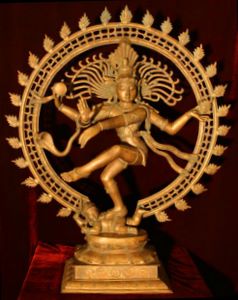
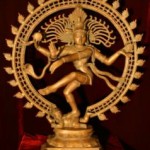 Nataraja, the Lord of Dancers is the cosmic form of Lord Shiva (In Sanskrit, Nata means dance and raja means Lord). The ring of fire and light, which circumscribes the entire figure, identifies the field of the Lord’s cosmic dance encompassing the whole universe. The lotus pedestal on which the Lord rests, locates the universe in the heart or consciousness of each person.The Nataraja figure is also eloquent of the paradox of Eternity and
  Time. It explains that the tranquil ocean and the rushing stream are not finally different. Shiva is Kala, meaning time, but he is also Maha Kala, meaning “Great Time” or eternity.
 Shiva is thus two opposite figures: the archetypal ascetic and the archetypal dancer. On the one hand he is complete tranquillity-inward calm absorbed in Self, absorbed in the void of the Absolute, where all distinctions merge and dissolve, and all tensions are at rest. But on the other hand he is total activity- life’s energy, frantic, aimless and playful.
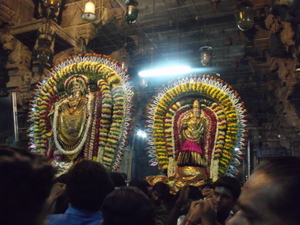
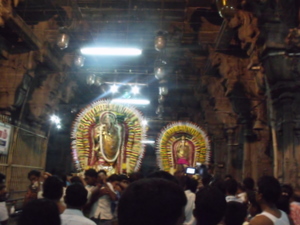
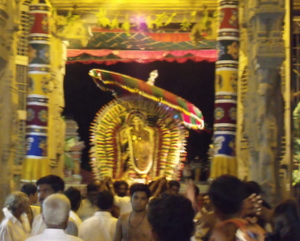
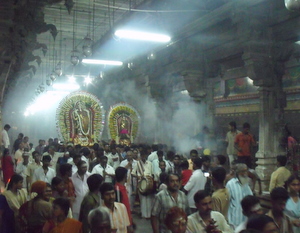
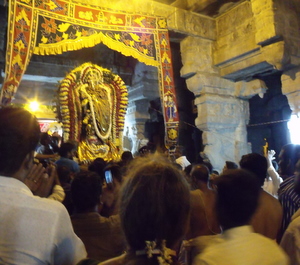
 One of the festivals to Lord Nataraja is the Thirumanjanam festival celebrated during the tamil month of Aani (sanskrit=Jayeshta). In the main temple of Lord Arunachaleswara, the deities of Lord Nataraja and
 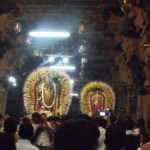 his consort Goddess Shivakami are brought out in procession with great fanfare and taken to the 1000 pillared hall where they are installed in a special shrine.
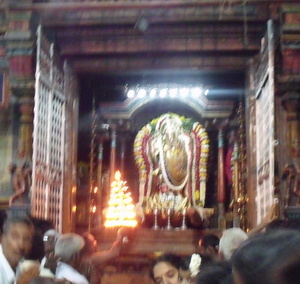
Interestingly the 3 tamil saivaite saints whose shrine faces the Nataraja shrine are also revered at the same time. Before the Nataraja and Shivakami
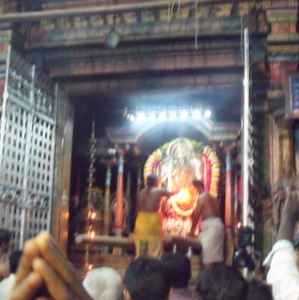
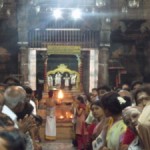 deities leave on procession, deeparadhana is performed for both the shrines facing each other and the crowd of devotees crane their necks this side and
 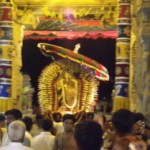 that side to take dharhsan of both the arathi rites which the priests perform simultaneously one to the other. This is known as the Arakattu Utsavam
 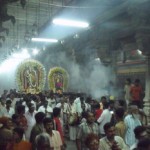 and only happens at this time.
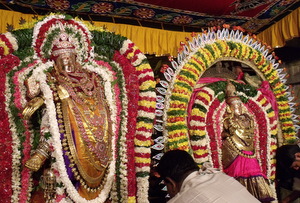 After Lord Nataraja and Goddess Shivakami are installed in the new shrine inside the 1000 pillared hall, the next day, early morning at dawn, a
 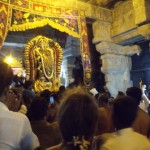 wonderful abhishekam, the actual “thirumanjanam” rite (literally meaning sacred bath) is performed and the deities are worshipped with alamkaram, karpuraratti and deeparadhana.