Day 8:28 pm
-
Athi Rudra Maha Yagnam in Tiruvannamalai
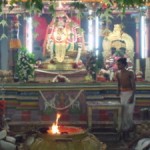 This is a very important form of worship of Lord Shiva, the source of cosmic energy for the entire creation. Lord Shiva is worshipped traditionally in the form of Lingam and Abhisheka is the ritual dearest to His heart. Rudram is the highest vedic chanting in praise of Lord Shiva and is considered
 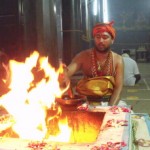 to be extremely powerful.
In Tiruvannamalai, the Athi Rudra Maha Yagnam has just been performed in a grand way in the big temple of Arunachaleswara from the 23rd to the 28th of May with the purpose of mitigating the doshas (bad effects) of the Agni Nakshatram (fire star constellation during which the summer heat reaches its peak).
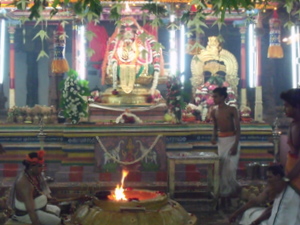
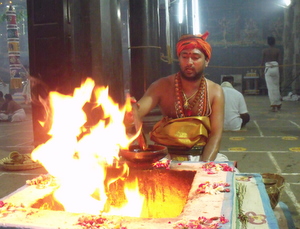
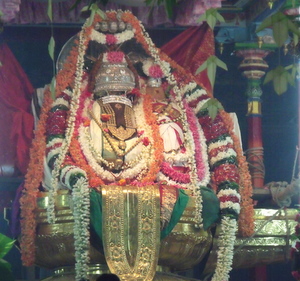
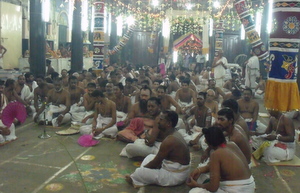
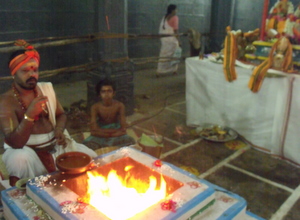
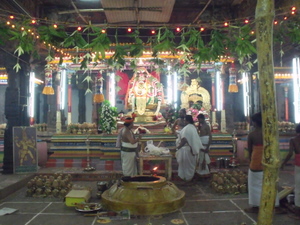
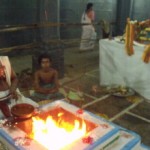
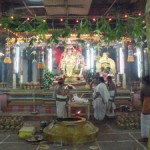
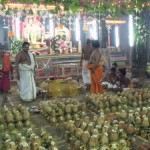 The Yagnam took place inside the vast kalyana mandapam of the temple. Eleven homa kundas were erected for the purpose of the yagnam. The Rudra Homas were conducted by very renowned Brahmin priests well versed in Vedic rituals. A very beautiful Lingam covered with gold was installed specially for the purpose of performing Rudrabhishekam everyday. The Rudrabhishekams were done on an elaborate scale by the Shivacharyas. Along with the Rudra Parayanas and Rudra Homas, other related rituals were also performed. Hundreds of learned Brahmin priests took part in the ceremonies and the air was
 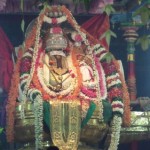 vibrant with the resounding chanting of the four Vedas and the tremendous sacred energy produced
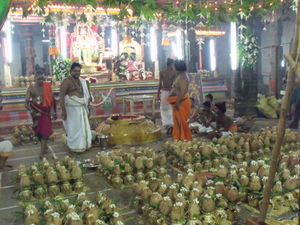
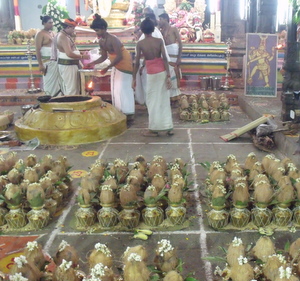
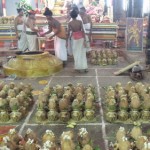
 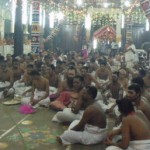 by the chanting of the Rudrams and the tending of the 11 sacred fires. 1008 Kalasams were consecrated within the Yagnam and they were taken in the end for abhishekam to the Arunachaleswara lingam inside the sanctum sanctorum.
 Sage Satapatha in his treatise “Maharnava Karma Vipaka” listed four types of Abhisheka procedures compatible with Vedic and scriptural lore. They are Rudram, Ekadasa Rudram, Maha Rudram and Athi Rudram – each being more potent than the preceding one. Of these, the most potent form of Athi Rudram. It involves 14641 Rudrams (Rudram is a combination of Namakam and Chamakam given in Rudradhyayam in the 5th Prapathakam of the 4th Kanda of Krishna Yajur Veda Samhita). Namaka recited once along with recital of Chamaka once
  constitutes one Rudram. Recital of 11 Namakas along with one Anuvaka of Chamaka at the end of each Namaka, thus completing one Chamaka constitutes Ekadasa Rudram. Recital of 11 Ekadasa Rudrams is Laghu Rudram or Rudraikadasini. Recital of 11 Laghu Rudrams is one Maha Rudram. Recital of 11 Maha Rudrams is one Athi Rudram. Therefore, in Athi Rudram 14641 Rudrams include
  14641 Namakams and 1331 Chamakams.
continue reading