Day 6:27 pm
-
The Karthigai Brahmotsavam
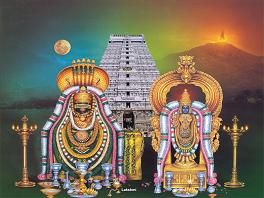 In India, all temple festivals are ‘Utsavams’ and the most important one is called ‘Brahmotsavam’. From the etymological point of view, the Sanskrit word ‘Utsava’ denotes an act of creation or re-creation. If we study the features of the Brahmotsavam, we will find that more than any other temple festival, the Brahmotsavam would essentially be a festival of re-creation.
The Karthigai Deepam Brahmotsavam holds a unique
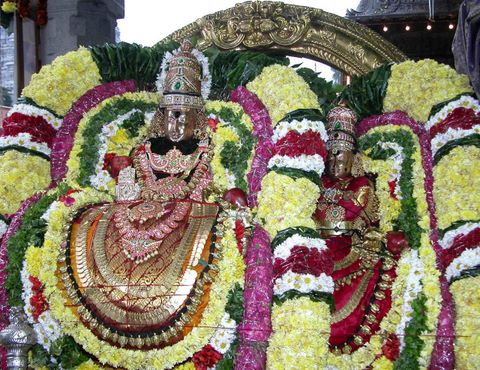 place in the world of temple festivals. Due to its ancient origins and deeply esoteric significance, it has withstood the ravages of time and modernization. Despite the decadence of the present age and all its evils, the beauty and wonder of the Deepam festival remain unchanged and unsullied. The true significance of all religious festivals is that the Supreme Being makes His presence felt strongly during that time. During Karthigai Deepam, Arunachala opens up the heart of His beloved ones and reveals Himself as the Supreme Being. Shining as ‘I’, ‘I’ the sole occupant seated in the centre of the Heart’s cave of His devotees, He is believed to guide and inspire the proceedings of the entire festival.
 On the first three days of the sixteen day festival, the various deities are propitiated, while the last three days form a sort of epilogue to the lighting of the Deepam on the Hill. Thus the main festival is only for ten days. The first day begins with the hoisting of the Flag which ceremoniously ushers in the ten days of the Brahmotsavam. Called Dwajaarohanam, it marks the beginning of any temple festival. The Dwajaarohanam of Karthigai this year took place at dawn on Friday 12th November and was attended by a fairly large crowd of devotees. The idol of the Lord was adorned
  beautifully with jewels and flowers and brought by the priests and placed in front of the dazzling golden flagpole in the first courtyard of the temple. At the appointed auspicious time, the flag was hoisted to the divine chanting sound of the Vedas accompanied by Nathaswaram music, drums and cymbals. The priests then invited all the sacred rivers, all the gods and goddesses and all the rishis and seers to come and witness and bless this occasion. After the ceremony was over, the Lord was taken around on procession and then installed in the vast hall (called the Kalyana Mandapam) on the southern side. Here he will stay for the next ten days, beaming graciously upon the multitude of devotees thronging at His feet for Darshan.
The special days before the actual Deepam day are the
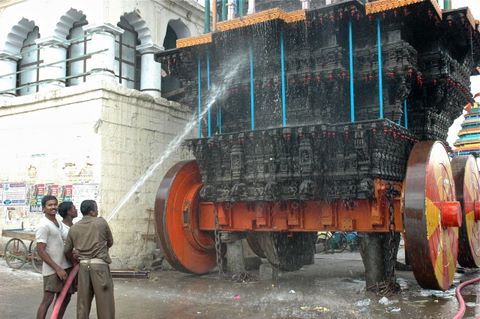
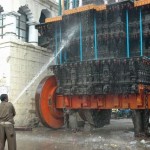
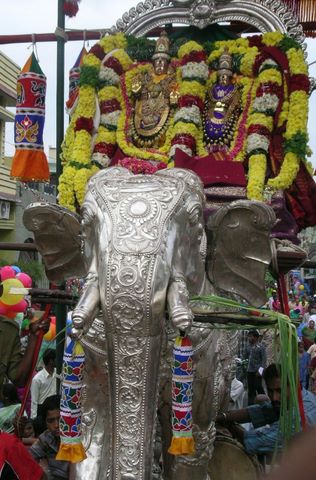 fifth and the seventh days. On the night of the fifth day, the Lord along with his consort is taken on His sacred Mount, the Rishaba (Bull) which is made of wrought silver in this case. The seventh day is the day of the Maha Ratham or the Great Chariot which is of spectacular proportions and the largest sacred chariot in India. This year it will take place on the 18th of November and millions of devotees braving the sun and rain will struggle to pull the chains of the chariot for it moves entirely by human force. The tenth Day is the most important one when the Maha Deepam will be lit on top
  of the Hill at sunset and falls on the 21st of November this year. The Deepam burns for seven, nine, eleven or thirteen days and at about six every evening, the flame flares up and burns throughout the night. It is visible for miles around and thrills the heart of every being who has the good fortune to look upon it. Giri Pradakshina at this time is a very special experience and devotees come from far, distant lands to partake of this Grace. May the Karthigai Deepam this year light the flame of jnana in each of our Hearts!
continue reading