Day 5:47 pm
-
Sama Veda chanting
 The Sāmaveda, (in sanskrit sāman means melody and veda means knowledge), is the second of the four Vedas. Its earliest parts are believed to date from 1700 BC and it ranks next in sanctity and liturgical importance to the Rig veda. It consists of a collection of hymns, portions of hymns, and detached verses, all but 75 taken from the Sakala Sakha of the Rigveda, the other 75 belong to the Bashkala Sakha, which are to be sung, using specifically indicated melodies called Samagana, by Udgatar priests at special Homas and Yagnas, in which the juice of the Soma plant, clarified and mixed with milk and other ingredients, is offered as propitiation to various deities.
The Sama Veda is the Yoga of Song. It consists of various hymns of the Rig Veda put to
 a different and more musical chant. Its secret lies in its musical annotation and rendering. The Sama Veda represents the ecstasy of spiritual knowledge and the power of devotion. If the Rig Veda is the knowledge, then the Sama Veda is its realization.
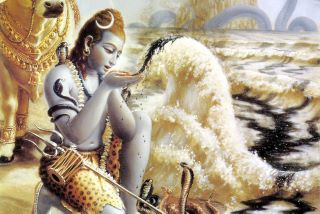
 Lord Shiva is believed to be a great fan of the Sama Veda chanting and in the epic Ramayana, Ravana gains the special favour of Lord Shiva by singing the Samaveda ganas to him while playing on his veena. This is how he was able to have so much power and create havoc in the life of Lord Rama.
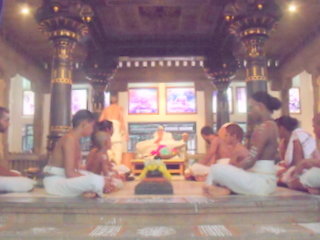
During the recent Karthigai Brahmotsavam, the Ramanashram hosted a group of Samaveda Udgatar priests from Kerala who rendered an excellent chanting of selections from the Samaveda, every afternoon,
 for all the ten days of the Utsavam. Devotees both indian and western listened to this chanting and found that the sounds were most conducive to their mediative practices.
continue reading