Aadi Puram
-
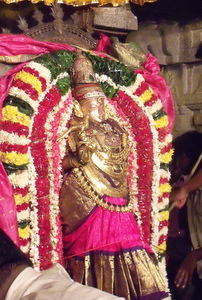 The tamil month of Aadi (sanskrit = Aashaada) has drawn to an end and the Goddess Shakthi to whom the whole month is dedicated is probably taking a much-needed rest after the frenzied rituals and celebrations with which she has been bombarded during all this month.
The culminating festival in her honour is the feast of Aadi Puram which falls on the Puram constellation. This year it was celebrated on August 12th and in the big temple of Arunachaleswara, there took place a grand religious and devotional extravaganza on this day.
In the evening, the Goddess Parashakthi is brought to the valaiyal kappu mandapam in the 5th courtyard. Here first the Goddess is worshipped with a grand abhishekam. Then She is beautifully adorned in a silk sari and decked with golden ornaments and flowers. After this a long queue of women devotees offer bracelets and bangles (valaiyal) to the Goddess. The priest places the bracelets on Her arms and then returns them to the women as prasad. Rudram is chanted by the Vaidikas all the while.
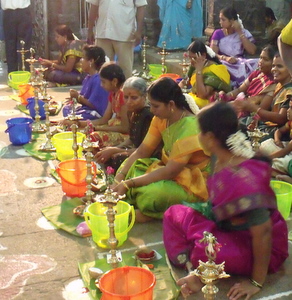
This Valaiyal kappu (protection with bracelets) ceremony is traditionally performed for preganant women in their 8th or 9th month. On Aadi Puram, this ceremony is performed to the Goddess as it is a general belief that She is at this time expecting the birth of Muruga or Subramanya, the second son of Shiva and Parvathi.
However the logic which underlies the sequence of the rituals of Aadi Puram is quite enigmatic. Whereas the the ritual of valaiyal kappu is especially to protect the woman who is in an advanced stage of pregnancy, in the next ceremony after this, the Goddess is treated as a young virgin woman about to get married and receives the
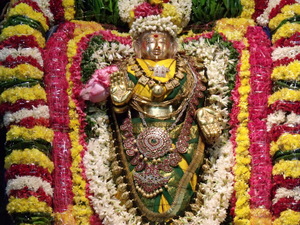 offering of a Thali, the traditional ornament of marriage. There seems to be in the celebration of Aadi Puram, an effect of condensation of all that the Goddess represents. This is amplified by the local cults of the Aadi month and the connection to Durga and is completed in the ensuing months with the Navaratri festival in autumn and the Karthikai festival in winter.