Day 7:02 pm
-
Advent
In the western world, Advent refers to the period preceding Christmas connected to the advent of Christ but here in Arunachala, Advent always refers to the day on which the great Sage of this epoch, our very own Bhagavan Ramana entered the sacred town of Tiruvannamalai.
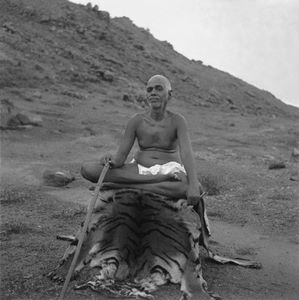
In the year 1896, on the first of September, Sri Ramana as a young lad of sixteen, arrived at the feet of the Holy Mountain. About a month earlier, in mid-July, he had already had his first death-experience and attained the highest truth which he called later as Self-Realisation. After this he became indifferent to his boyhood life, studies, play etc and began to seek solitude. For this, his elder brother taunted him and the young boy Ramana understanding the truth behind his brother’s rebuke, left his parental home leaving a note that he was going in search of his father. With this farewell note he left Madurai for ever.
Right from the time he left his house, a series of miracles took place and Arunachala mysteriously guided the youth to his final destination. It was Arunachala who delayed the train’s departure so that Ramana could board it and later on appeared in the form of a Maulvi in order to give the lad directions to reach Tiruvannamalai and then, lo and behold, actually granted divine dharshan to the boy in the form of a column of effulgence in the temple of Ariyanainallur.
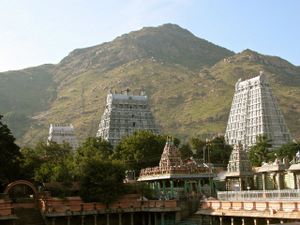 Not many people know that the doors of the Arunachaleswara temple which were closed habitually at the time of his arrival, started to open one by one of their own accord just as Sri Ramana entered. Indeed is there any doubt left that the Son had thus returned to his Father’s house?
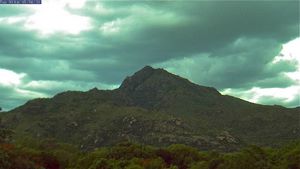
Who can describe what Ramana felt when he saw the Hill for the first time? In his own words: “I came up here and saw, and found thou stood as a Hill, But who then is the seer … no seer then remained. No mind survived even to say that I saw this, or even to say I didn’t.”
This year on September 1st in Ramanashram, the Madurai Ramana Kendra conducted a series of parayanams (religious chanting) at the Samadhi shrine and at the Mothers shrine, as a way of commemorating Advent. Devotees participated in the chanting and thanked the Gods for bringing them to the Abode of the great Master whose Eternal Presence continues to thrill millions…
continue reading
-
Girivalam shrines – Snake worship
Snake worship is an ancient and widespread religious practice in India. The
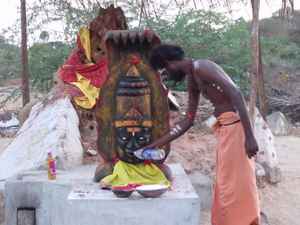 Cobra is associated with the Lingam, the emblem of Lord Shiva. The Nagarpanchami snake festival is celebrated by many Hindus. On this day, people worship snake gods with flowers, milk and eggs in front of their idols in temples. Innumerable shrines containing images of the snake king Vasuki bear eloquent testimony to the influence of the Serpent on the social and spiritual fabric of India.
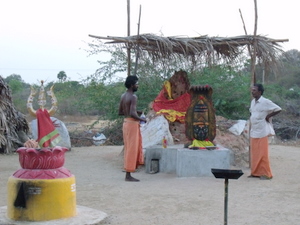 Here in Tiruvannamalai too, there are many termite mounds which are considered to be the dwelling place of serpents and hence venerated as snake temples. The most recent snake shrine is a huge termite hill on the left side of the outer Girivalam path a few metres after the Draupadi temple. Within a short time this temple has become quite popular and the resident serpent goddess has been christened “Nagathamman” (Naga means snake in Sanskrit).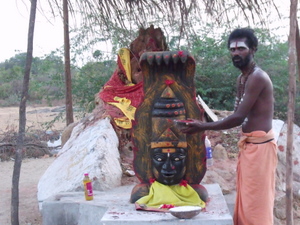
In Hindu mythology we come across several episodes involving serpents. When the ocean of milk was churned for the recovery of ambrosia, the snake king Vasuki served as a rope and was tied around Mehru mountain. The poison ‘HalaHala’ which emerged from the ocean prior to the arisal of the nectar, was in danger of engulfing the whole universe. But Lord Shiva bravely consumed the poison emitted by the serpent and thus saved the universe from destruction. Due to the effect of the poison his throat became dark blue in colour. For this reason, Shiva has the name of NeelaKantha (the Blue-throated One).
continue reading